Cold Therapy Benefits: What a Cold Plunge Can Actually Do for You
Share
After a hard workout, you might feel fine until you try walking downstairs the next morning. That familiar soreness is one reason people turn to cold plunges. Others enjoy the refreshed feeling afterward or simply like having a moment in the day that pulls them away from their phone.
But what can cold therapy realistically offer? Here’s where the research is encouraging—and where expectations need a little cooling down.
What is cold therapy?
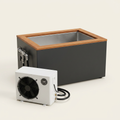
Cold therapy uses cold temperatures to cool part or all of the body. An ice pack targets a small area, while a cold plunge immerses much of your body in chilled water. This article focuses on cold plunges and ice baths.
The response happens quickly: blood vessels near the skin narrow, and breathing and heart rate can rise sharply. That initial jolt is called the cold shock response. (heart.org)
Less soreness after demanding exercise
This is one of the better-supported reasons to use a cold plunge. Research suggests cold-water immersion can reduce muscle soreness and improve how recovered people feel after intense exercise compared with simply resting.
For someone coming off a tough training session or a demanding game, that could mean feeling less uncomfortable the following day. It doesn’t mean your muscles are completely repaired or ready for another hard session just because they hurt less. (link.springer.com)
A possible effect on stress and sleep
The first moments in cold water can feel anything but relaxing. Still, researchers are studying whether benefits show up later.
A 2025 review published in PLOS ONE found evidence of reduced stress 12 hours after cold-water immersion, but the effect wasn’t consistent across other measurement times. Some included research also suggested improvements in sleep quality.
Those findings are promising, though the evidence is still limited. A cold plunge isn’t a guaranteed fix for poor sleep or a stressful week. (journals.plos.org)
Timing matters if you’re building muscle
Feeling less sore and building more muscle are different goals. A 2024 research review found that regularly using cold-water immersion immediately after resistance training may reduce muscle growth compared with lifting without that immediate cold exposure.
If gaining muscle is your priority, think twice before making an ice bath the automatic finish to every lifting session. Researchers haven’t established an exact waiting period that eliminates this concern. (pmc.ncbi.nlm.nih.gov)
Start gently—there’s nothing to prove
You don’t need to chase the coldest temperature or stay in longer than everyone else. Begin with cooler showers to become familiar with the sensation, enter water gradually, and keep your head above the surface. Avoid plunging alone or combining immersion with breath-holding.
Cold water puts extra strain on the heart. Speak with a healthcare professional first if you have heart disease, blood pressure problems, or another relevant health condition. Get out if you feel dizzy, experience chest discomfort, or cannot control your breathing. (heart.org)
A cold plunge can have a place in a recovery routine, particularly for managing soreness. Choose when to use it around your goals, and give sleep, food, and rest just as much attention.