Infrared Sauna vs. Traditional Sauna: What’s the Difference?
Share
If you're considering adding a sauna to your home or wellness space, one of the first decisions you'll face is whether to choose an infrared sauna or a traditional sauna.
Both provide a heated environment designed for relaxation and wellness, but they create that heat in very different ways. Those differences affect the temperature, warm-up time, overall experience, and installation requirements.
Here's what you should know before choosing between the two.
What Is an Infrared Sauna?
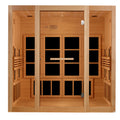
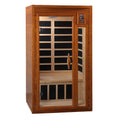
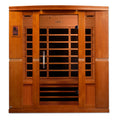
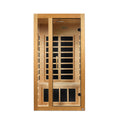
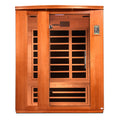
An infrared sauna uses infrared heaters rather than a traditional sauna stove to produce heat.
Instead of primarily heating the air around you, infrared heaters emit radiant energy that is absorbed by the body and surrounding surfaces. Because of this heating method, infrared saunas can provide a warm sauna experience while operating at lower air temperatures than traditional saunas.
Depending on the model, infrared saunas may use far-infrared (FAR), near-infrared, or a combination of infrared wavelengths.
What Does an Infrared Sauna Feel Like?
Infrared saunas generally provide a gentler, more gradual heat. This can make them appealing to people who enjoy warmth but don't necessarily want the intense heat of a traditional sauna.
Many home infrared saunas operate at temperatures around 110°F to 140°F, although the exact range depends on the sauna model and manufacturer.
What Is a Traditional Sauna?
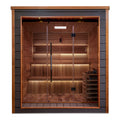
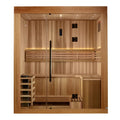
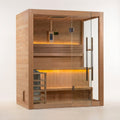
A traditional sauna heats the sauna room using a sauna heater or stove, often combined with sauna stones.
Rather than directing infrared energy toward the body, the heater raises the temperature of the air inside the sauna. Traditional saunas typically operate at considerably higher temperatures than infrared models.
Depending on the sauna and heater, temperatures typically range from 150°F to 190°F.
Another major difference is humidity. In many traditional saunas, small amounts of water can be poured over heated sauna stones to create bursts of steam and temporarily increase the perceived humidity.
This creates the classic hot sauna experience that many people associate with Finnish-style sauna bathing.
Infrared vs. Traditional Sauna: Key Differences
| Feature | Infrared Sauna | Traditional Sauna |
|---|---|---|
| Heating method | Infrared heaters | Sauna heater/stove |
| Typical temperature | Approximately 110–140°F | Approximately 150–190°F |
| Heat experience | Gentler radiant warmth | Hotter surrounding air |
| Warm-up | Generally faster | Generally longer |
| Humidity | Typically dry | Can include bursts of steam |
| Installation | Often simpler, depending on the model | May require higher-voltage electrical service |
| Experience | Modern, mild heat | Classic sauna environment |
Exact specifications vary by sauna model, so always check the manufacturer's requirements before purchasing or installing a sauna.
Which Sauna Heats Up Faster?
Infrared saunas generally require less time to become ready for use because they don't need to heat the entire room to the high temperatures found in traditional saunas.
Traditional saunas typically require more time for the heater, stones, air, and sauna interior to reach the desired temperature.
Warm-up time varies significantly based on the sauna's size, heater, room temperature, construction, and desired operating temperature.
Which Sauna Gets Hotter?
If you're looking for high temperatures and intense heat, a traditional sauna will usually be the better choice.
Traditional saunas can reach temperatures approaching 190°F in many residential models.
Infrared saunas generally operate at lower temperatures. However, lower air temperature doesn't necessarily mean the experience won't feel hot. Infrared heaters transfer radiant heat directly toward the body, creating a different type of warmth.
Ultimately, this comes down to personal preference.
What About Electricity and Installation?
Installation requirements can be another important factor when deciding between infrared and traditional saunas.
Some smaller infrared saunas can operate using a standard household electrical connection, while larger or more powerful models may require a dedicated circuit.
Traditional electric sauna heaters often require 240V electrical service and a dedicated circuit because of their higher power requirements.
Electrical requirements vary considerably between models. Always follow the manufacturer's specifications and use a qualified electrician when required.
Infrared Sauna Advantages
An infrared sauna may be a good fit if you prefer:
-
Lower operating temperatures
-
Gentler radiant heat
-
Faster warm-up times
-
A modern home wellness experience
-
Potentially simpler electrical requirements, depending on the model
Infrared saunas can be particularly attractive for home gyms, wellness rooms, recovery spaces, and other areas where convenience is important.
Traditional Sauna Advantages
A traditional sauna may be a better fit if you prefer:
-
Higher temperatures
-
The classic sauna experience
-
Hot surrounding air
-
Sauna stones
-
The ability to create bursts of steam on compatible models
-
A more traditional Finnish-style sauna environment
For people who love intense heat and the atmosphere of a classic sauna, traditional models are difficult to replace.
Is an Infrared or Traditional Sauna Better?
There isn't one type of sauna that's automatically better for everyone.
The right choice depends on the experience you're looking for.
Choose an infrared sauna if:
You prefer gentler temperatures, radiant heat, quicker warm-up, and a convenient home wellness experience.
Choose a traditional sauna if:
You want higher temperatures, sauna stones, intense heat, and the classic sauna experience.
You should also consider available space, electrical requirements, budget, sauna capacity, wood construction, and the features included with each model.
Choosing the Right Sauna for Your Space
Before buying either type of sauna, consider:
-
How many people will regularly use it
-
Where are you planning to install it
-
Available electrical service
-
Interior and exterior dimensions
-
Your preferred temperature range
-
Infrared vs. traditional heating
-
Indoor vs. outdoor placement
-
Included lighting, audio, and comfort features
-
Manufacturer warranty and support
Taking the time to compare these factors can help you find a sauna that fits both your space and your desired experience.
Explore Infrared & Traditional Saunas
Whether you prefer the gentle, radiant warmth of infrared or the intense heat of a traditional sauna, Zenith Saunas offers premium sauna options for a variety of spaces and preferences.
Explore our selection of infrared and traditional saunas to find the right fit for your home or wellness space.
Ready to find your sauna? Explore the Zenith Saunas collection and compare available models.
Disclaimer: This article is for general educational purposes and is not medical advice. Sauna use may not be appropriate for everyone. Consult a qualified healthcare professional if you have a medical condition, are pregnant, take medications that may affect heat tolerance or hydration, or have concerns about sauna use.